
How to choose a lift chair
Choosing the right lift chair involves more than picking one that looks comfortable. You need to consider your body size, mobility needs, available space, and budget. This guide walks through each decision step by step.
Step 1: Determine the right size
Size is the most important factor. A chair that doesn't fit properly won't be comfortable or safe, no matter how many features it has.
Measure yourself
- Seat width: Measure from hip to hip while sitting. Add 2-3 inches for comfort.
- Seat depth: Measure from the back of your hips to the back of your knees, then subtract 2-3 inches.
- Seat height: Measure from the floor to the back of your knee while standing.
- Back height: Measure from the seat to the top of your shoulders while sitting.
Our detailed sizing guide explains exactly how to take these measurements.
Consider your weight
Compare the user's weight against the weight capacity the manufacturer publishes for that exact model, and confirm the figure on the manufacturer's own product page rather than a retailer summary. Capacities differ between sizes and upholstery versions of the same model name. If the user is close to the published limit, choose a model with a higher published capacity.
If you need a higher weight capacity, see our guide on lift chairs for heavy people.

Step 2: Choose the position type
Lift chairs come in three main position types. Each offers different reclining capabilities.
Two-position lift chairs
These recline part way, enough for reading, watching television or a short nap. They are usually the simplest and most compact option. Manufacturers publish different maximum angles, so check the angle for the specific model.
Best for: People who mainly want help standing up and don't need to recline fully flat.
Three-position lift chairs
These recline much further back and suit longer naps or elevating the legs. Published maximum angles vary by model, and not every chair marketed as lay-flat reaches a true flat position, so check the manufacturer's stated angle.
Best for: People who want to nap comfortably in the chair or need to elevate their legs for circulation.
Infinite-position lift chairs
These have two motors that control the backrest and footrest independently. You can adjust each to any angle you want. Some models recline completely flat.
Best for: People with specific comfort needs, back pain, or who want maximum flexibility.
Learn more in our detailed comparison: Position types explained
Step 3: Measure your space
Lift chairs need room to recline. Measure before you buy to avoid surprises.
Clearance needed
Reclining chairs need clear floor space behind or in front depending on the mechanism. Wall-hugger designs slide forward as they recline and need less space behind them. Required clearance differs by model, so use the manufacturer's stated clearance for the chair you are considering and measure that distance in the actual room.
Doorway width
Measure the width of every doorway, hallway and turn the chair must pass through, then compare those measurements against the manufacturer's published overall width and shipping carton dimensions. Ask the seller for carton dimensions if they are not listed.
If space is tight, see our guide on small lift chairs.
Step 4: Consider essential features
Motor quality
The motor is the heart of the lift chair. Look for:
- Motors rated for the chair's full weight capacity
- Smooth, quiet operation
- A smooth, controlled lifting speed that the user can stop at any point
If you have weak knees, motor quality is especially important. See our guide: Lift chairs for weak knees
Control type
Most lift chairs use a wired remote with large buttons. Some offer:
- Wireless remotes (easier to store but need battery changes)
- Programmable positions (save your favorite positions)
- Backlit buttons (easier to see in dim light)
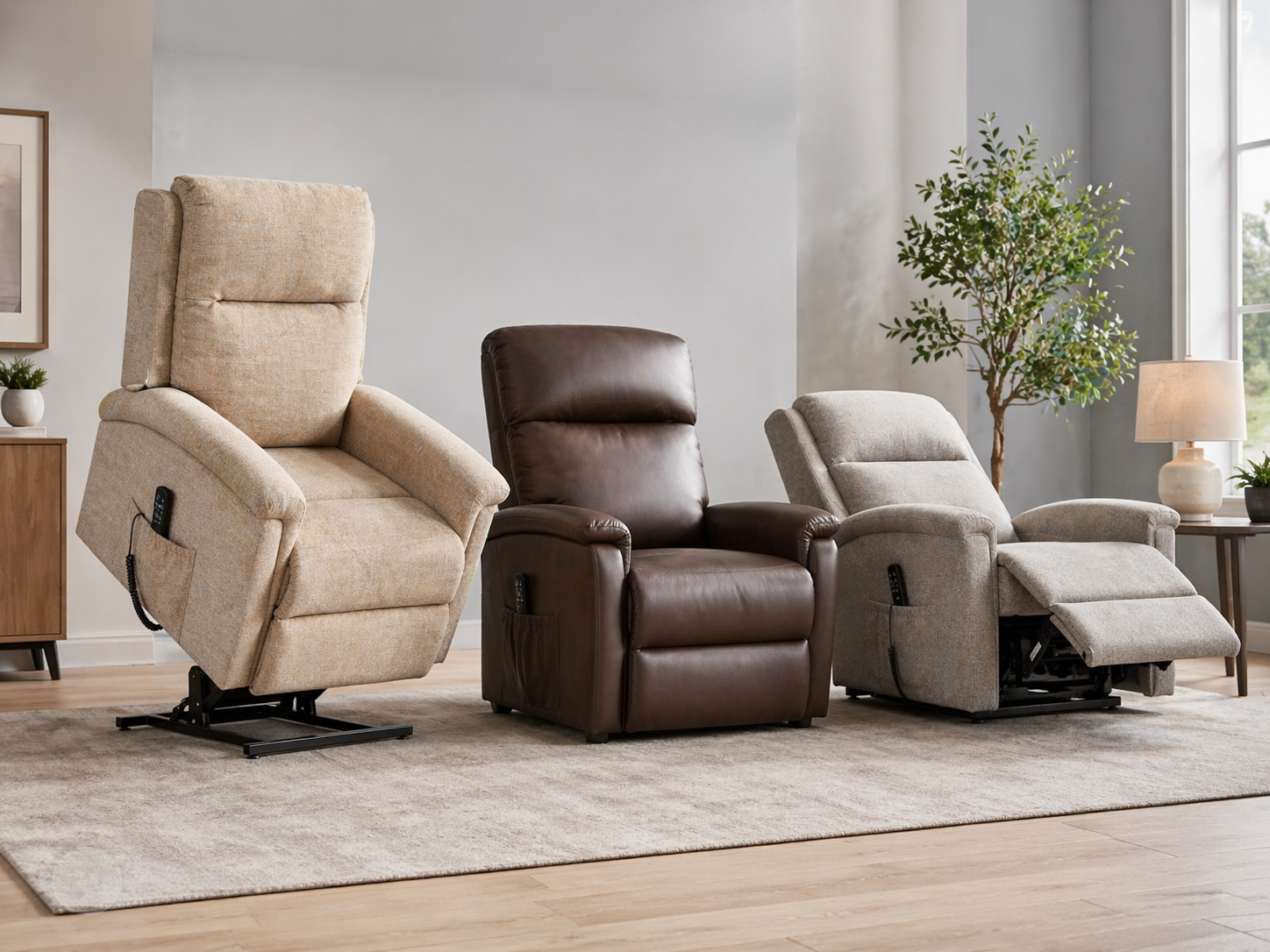
Upholstery
Common options include:
- Fabric: Breathable, comfortable, many color choices. Can stain more easily.
- Leather: Easy to clean, durable, looks upscale. Can feel hot in summer.
- Faux leather: Easier to clean than fabric, more affordable than real leather.
Step 5: Decide on optional features
Heat and massage
Heat can help with stiffness and pain. Massage improves circulation. These features usually increase the price, so check the current cost on the listing for the model you are considering.
Worth it if: You have chronic back pain, arthritis, or circulation issues.
Battery backup
Lets the chair work during power outages. This option usually increases the price, so confirm the current cost on the listing.
Worth it if: You live in an area with frequent power outages or worry about being stuck in the chair.
USB charging ports
Built into the armrest for charging phones and tablets. Confirm whether the model you are considering includes them and any cost difference.
Worth it if: You use your phone or tablet frequently while sitting.
Side pockets and cup holders
Storage for remotes, reading materials, and drinks. Often included; confirm on the listing.
Worth it if: You want to keep essentials within reach and reduce clutter.
Step 6: Set your budget
Prices vary substantially by size, upholstery, motor configuration, optional features, seller, delivery method and current availability. Rather than working from a general price range, compare the complete delivered cost of the specific chairs you are considering, including delivery, any room-of-choice or assembly service, and what happens to the packaging. Then compare those totals against the warranty and return terms each seller offers.
See our budget lift chair guide for specific recommendations.
Step 7: Check warranty and return policy
Warranty coverage varies considerably between manufacturers and sellers. Check which components are covered, how long each component is covered, whether labor and shipping are included, who actually performs service, and what actions void coverage. Check the return policy separately: whether returns are accepted at all, how long the window is, who pays return shipping, and whether a restocking fee applies. Get these terms in writing before ordering.
Common mistakes to avoid
- Buying based on price alone without checking quality
- Not measuring yourself or your space before ordering
- Choosing a chair at your exact weight limit
- Ignoring the warranty terms
- Not considering delivery and setup costs
Read our full guide: Buying mistakes to avoid
Could Medicare help with the cost?
Original Medicare Part B may cover the seat-lift mechanism—but not the chair itself—when Medicare's medical-necessity and documentation requirements are met. Confirm eligibility before buying and use a Medicare-enrolled supplier.
Buying privately and using Medicare are two separate paths. Affiliate retailers linked elsewhere on this page are private-pay sellers and do not bill Medicare for purchases made through our links. Do not assume that a private purchase will be reimbursed. To pursue Medicare coverage, verify eligibility before purchasing and use Medicare's official directory to find an enrolled medical-equipment supplier. Ask whether the supplier accepts assignment.
This guide explains how to evaluate lift chairs. It does not state specifications for individual models, because those differ by size, upholstery and revision. Always confirm measurements, weight capacity, warranty and return terms on the manufacturer's product page and the seller's listing for the exact chair you intend to buy.
Related Guides
Best Lift Chairs for Seniors
Compare top lift chair options for comfort, support, room size, and daily use.
What Size Lift Chair Do I Need?
Detailed measuring guide to find the perfect fit for your body.
Lift Chair vs Recliner
Understanding the key differences to help you choose the right option.
Are Lift Chairs Worth It?
Weighing the benefits and costs to help you decide.