
Two-position vs three-position vs infinite-position lift chairs
Lift chairs come in three main position types. Each offers different reclining capabilities. Understanding the differences helps you choose the right chair for your comfort needs.
What these labels actually mean
These names describe how a chair is marketed, not a standard anyone enforces. Manufacturers define two-position, three-position and infinite-position differently, and the same words can mean different things from one brand to the next. The number of motors is a separate question from the position label. What actually matters is whether the backrest and the footrest move independently of each other, and what angles the chair reaches. Check both on the manufacturer's page for the exact model, and if it is not stated, ask the seller before ordering.
Two-position lift chairs
Two-position chairs are the most basic type. They have two main positions: upright for sitting and reclined for relaxing.
How they work
The backrest and footrest move together as one unit rather than independently. When you recline, the back goes down and the footrest comes up at the same time. How far each reclines differs by model.
Best for
- Reading or watching TV
- Short rest periods
- People who mainly need help standing up
- Smaller spaces (they take up less room)
- Budget-conscious buyers
Limitations
- May not recline flat enough for comfortable napping
- Can't adjust back and legs independently
- Limited positioning options
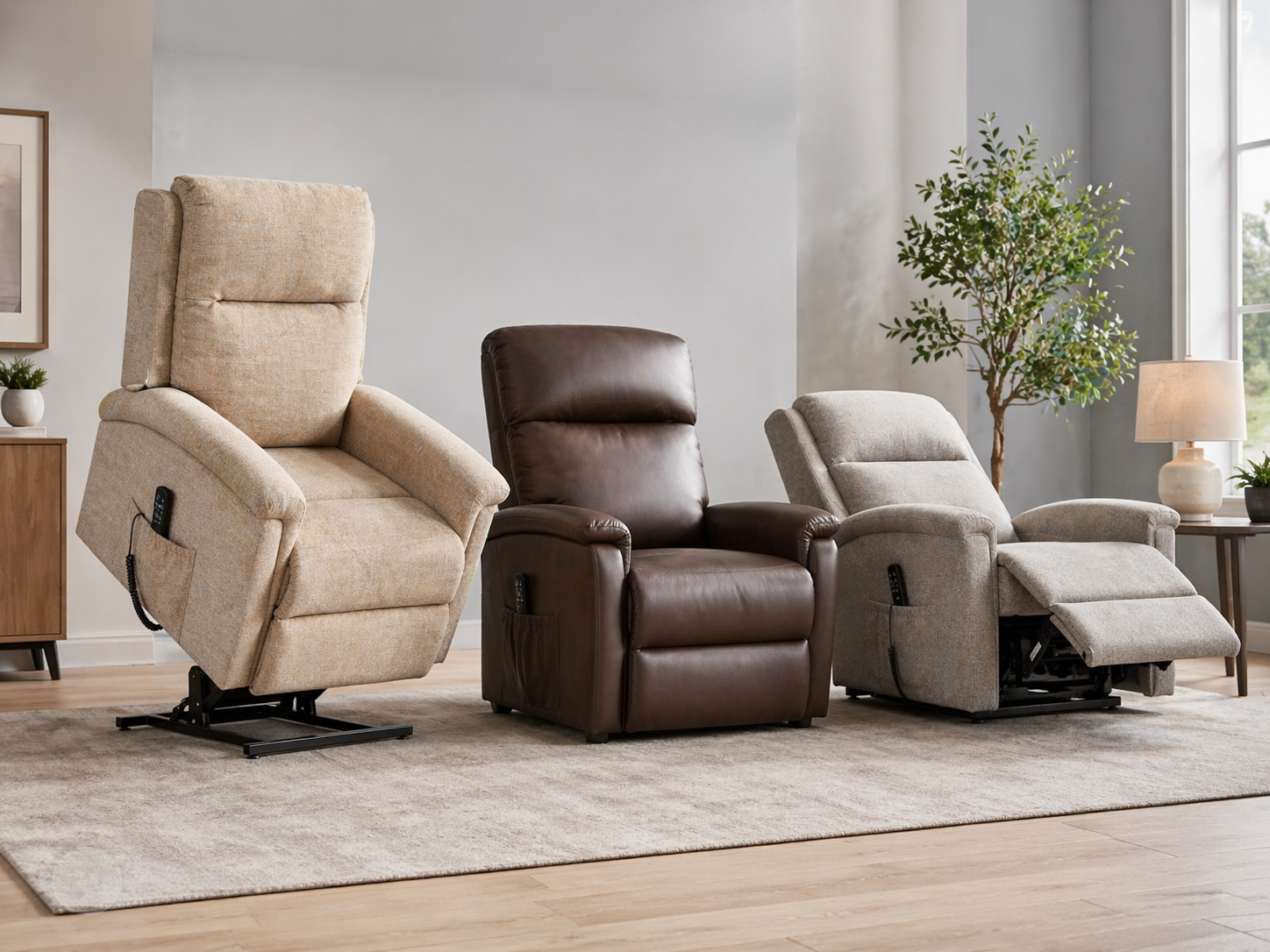
Three-position lift chairs
Three-position chairs add a more reclined position. They are a popular type because they balance features and value.
How they work
Like two-position chairs, the backrest and footrest move together as one unit rather than independently. Three-position chairs recline further than two-position chairs. How far each reclines differs by model.
The three positions
- Upright: Normal sitting position
- TV position: Partially reclined
- Sleep position: More reclined than the TV position
Best for
- Napping in the chair
- People who spend several hours in the chair daily
- Those who want more comfort options than a two-position chair
Limitations
- Still can't adjust back and legs independently
- Need more floor space to recline fully
- Cost more than two-position chairs
Infinite-position lift chairs
Infinite-position chairs offer the most flexibility. They have two separate motors that control the backrest and footrest independently.
How they work
Separate motors move the backrest and footrest independently so the two can be set at different angles. This creates many positioning combinations. The range each reaches differs by model.
Example positions
- Legs elevated with back upright
- Back reclined with legs down
- Back and legs elevated together
- Reclined flat for sleeping
- Any combination in between
Best for
- People with specific comfort needs
- Those who need to elevate legs independently
- People who spend many hours in the chair
- Anyone who wants maximum positioning flexibility
Special features
Many infinite-position chairs include:
- Programmable memory positions (save your favorite settings)
- Zero gravity is a marketing term for a reclined position with the legs raised near or above hip level. Manufacturers apply it inconsistently and it does not guarantee any particular posture or health result. If a specific position matters, ask the manufacturer for the actual angles that model reaches.
- Ability to recline completely flat
Limitations
- Most expensive option
- More complex controls (though still easy to use)
- Two motors mean more potential maintenance

Comparison chart
| Feature | Two-position | Three-position | Infinite-position |
|---|---|---|---|
| Max recline angle | Varies by model, confirm with the manufacturer | Varies by model, confirm with the manufacturer | Varies by model, confirm with the manufacturer |
| Independent controls | No | No | Yes |
| Good for napping | Limited | Yes | Excellent |
| Space needed | Least | Moderate | Most |
Which type should you choose?
Choose a two-position chair if
- You mainly need help standing up
- You won't nap in the chair regularly
- You have limited space
- You're on a tight budget
- You want the simplest option
Choose a three-position chair if
- You want to nap comfortably in the chair
- You want more comfort than a two-position chair
- You have moderate space available
- You want good value for money
Choose an infinite-position chair if
- You have specific comfort needs
- You spend many hours in the chair daily
- You need to adjust back and legs independently
- You want maximum positioning flexibility
- Budget is less of a concern than comfort
Other factors to consider
Your health conditions
Which positions are appropriate depends on the person, not on the marketing category of the chair. A doctor, physical therapist or occupational therapist can advise which positions suit a specific condition, and whether reclining is appropriate at all. Do not rely on a furniture description to answer a medical question. If a health condition is part of the reason for buying, ask a clinician before choosing a position type.
How you'll use the chair
- Watching TV: Two-position is usually enough
- Reading: Any type works
- Napping: Three-position or infinite-position
- Sleeping overnight: Infinite-position (can go completely flat)
Available space
More positions mean more reclining range, which needs more floor space. If space is limited, see our guide on small lift chairs.
Wall-hugger vs standard
This is separate from position type. Wall-hugger chairs slide forward as they recline, so they can sit closer to the wall. Both three-position and infinite-position chairs come in wall-hugger designs.
Wall-hugger chairs save space but cost slightly more. Use the clearance the manufacturer states for that model to work out whether it fits your room.
This page explains how these chair types differ in function. It does not give medical advice, and it does not state angles, dimensions or prices for individual chairs, because those differ by model. Confirm what a specific chair does on the manufacturer's product page, and speak with a clinician about what positions are appropriate for the person who will use it.
Related Guides
How to Choose a Lift Chair
Complete guide covering all features and considerations.
Lift Chair vs Recliner
Understanding the key differences between lift chairs and regular recliners.
Budget Lift Chairs
Affordable options in all three position types.
Lift Chairs for Weak Knees
What to compare when knee strength is a consideration.