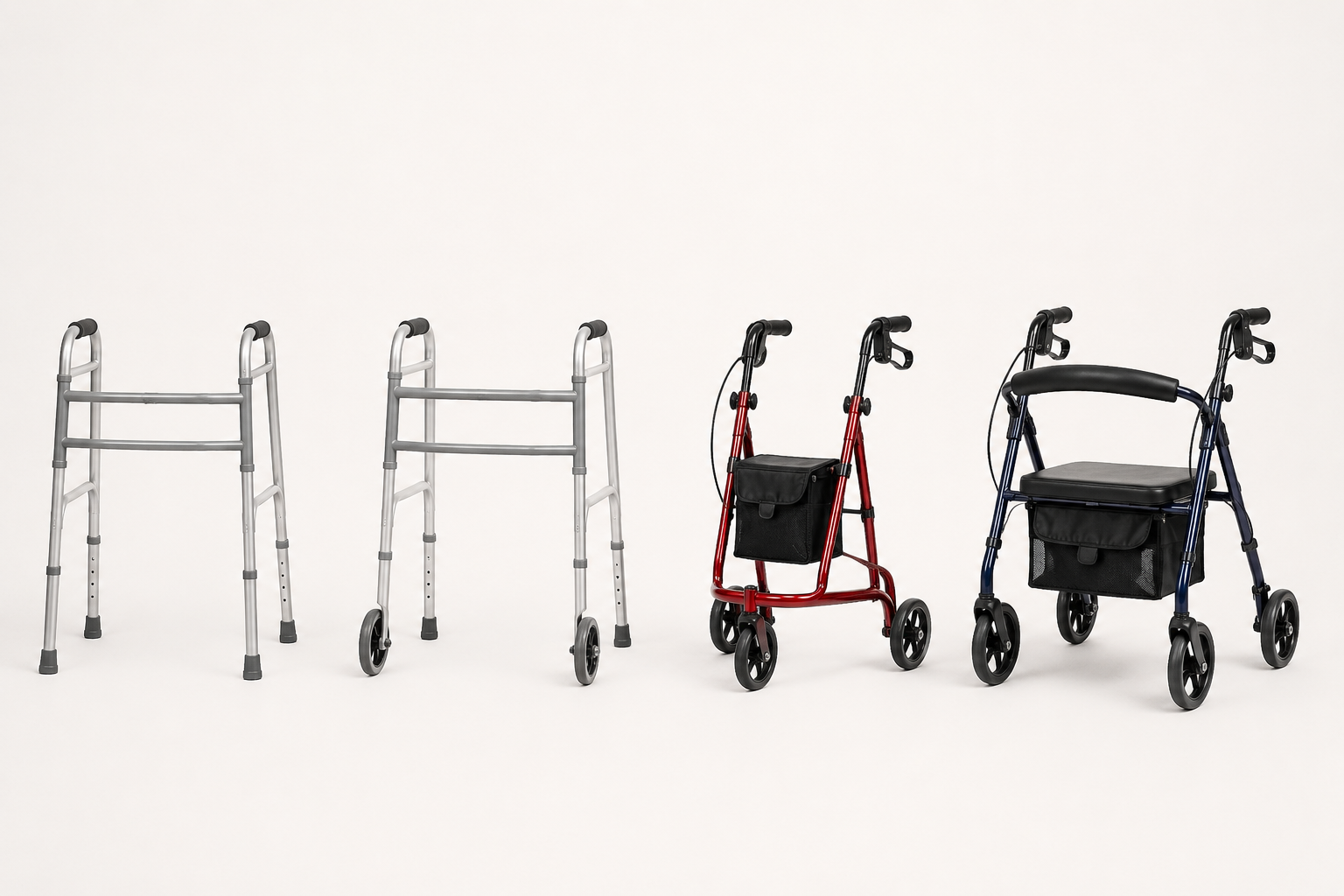
Start Here: Understand the Main Walker and Rollator Types
The right mobility aid depends on how much support the user needs, whether the device must be lifted or pushed, the available indoor space, hand strength, balance, walking ability, transportation, and the surfaces where it will be used.
Standard Walkers
A standard walker has four legs with rubber tips and no wheels. It generally provides firm support but must be lifted and moved forward. Check the complete width, handle-height range, folded size, product weight, user strength, and floor surfaces.
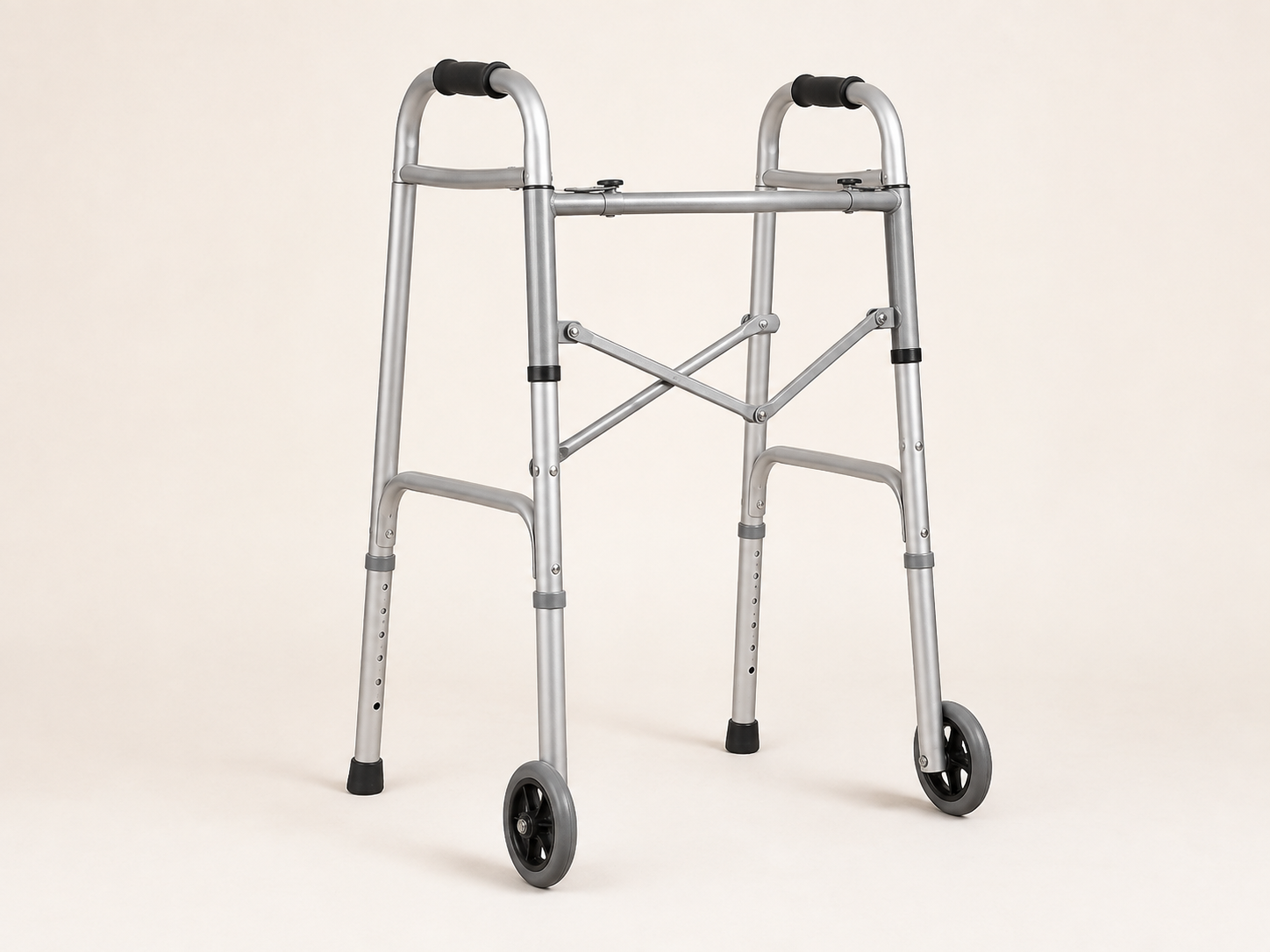
Two-Wheel Walkers
A two-wheel walker has wheels on the front legs and rubber tips or glides on the rear legs. Check wheel size, rear-tip condition, turning space, handle height, folded dimensions, and whether the user can control the walker without pushing it too far ahead.
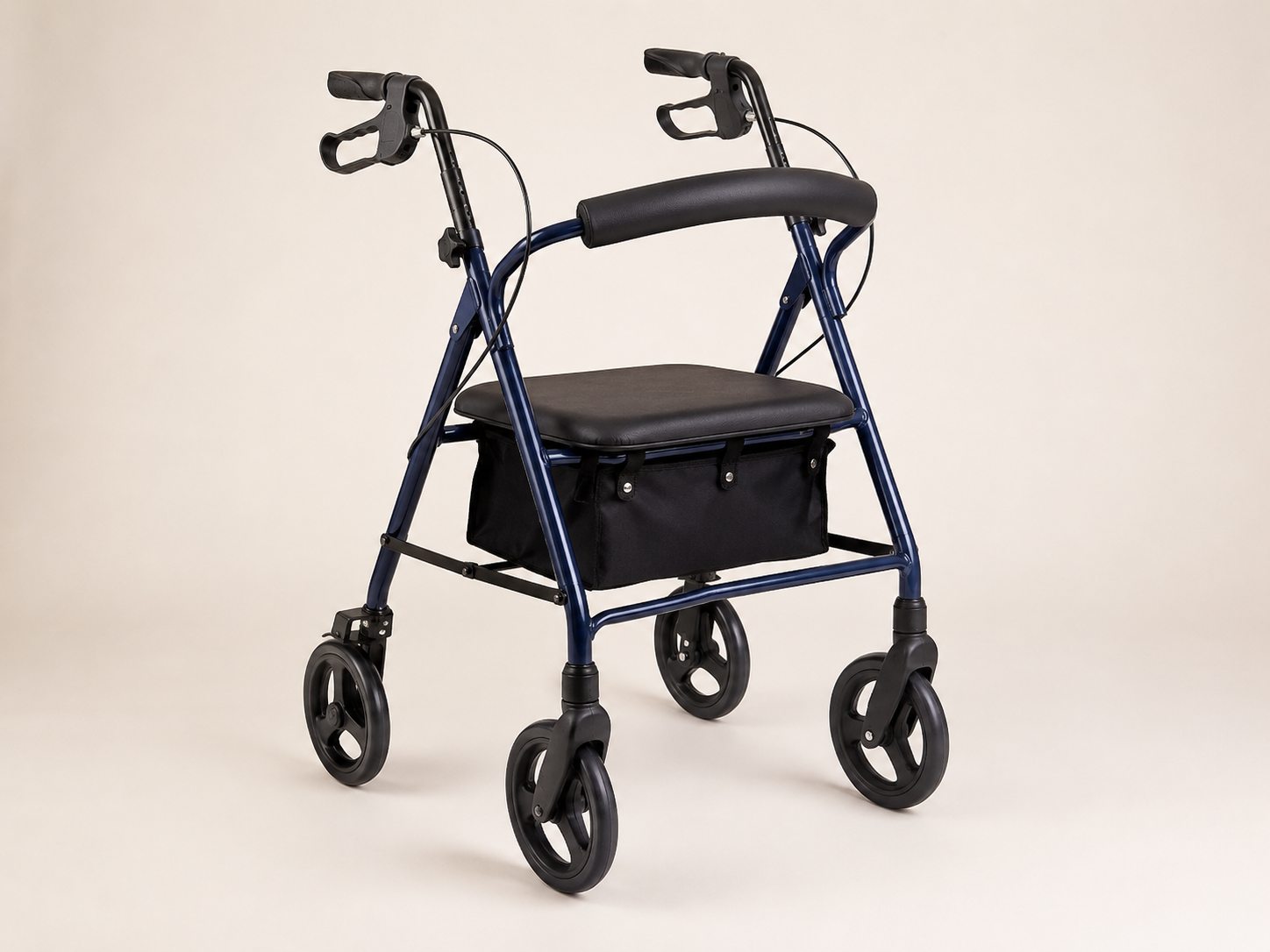
Four-Wheel Rollators
A four-wheel rollator usually includes hand brakes, a seat, a backrest, and storage. Check brake operation, wheel size, seat height and width, handle adjustment, overall width, folded size, product weight, and the manufacturer's stated weight capacity.
Three-Wheel Rollators
A three-wheel rollator may turn in less space and fold more narrowly, but it normally does not provide a seat. Check stability, brake operation, storage, wheel size, overall width, folded dimensions, and suitability for the intended surfaces.
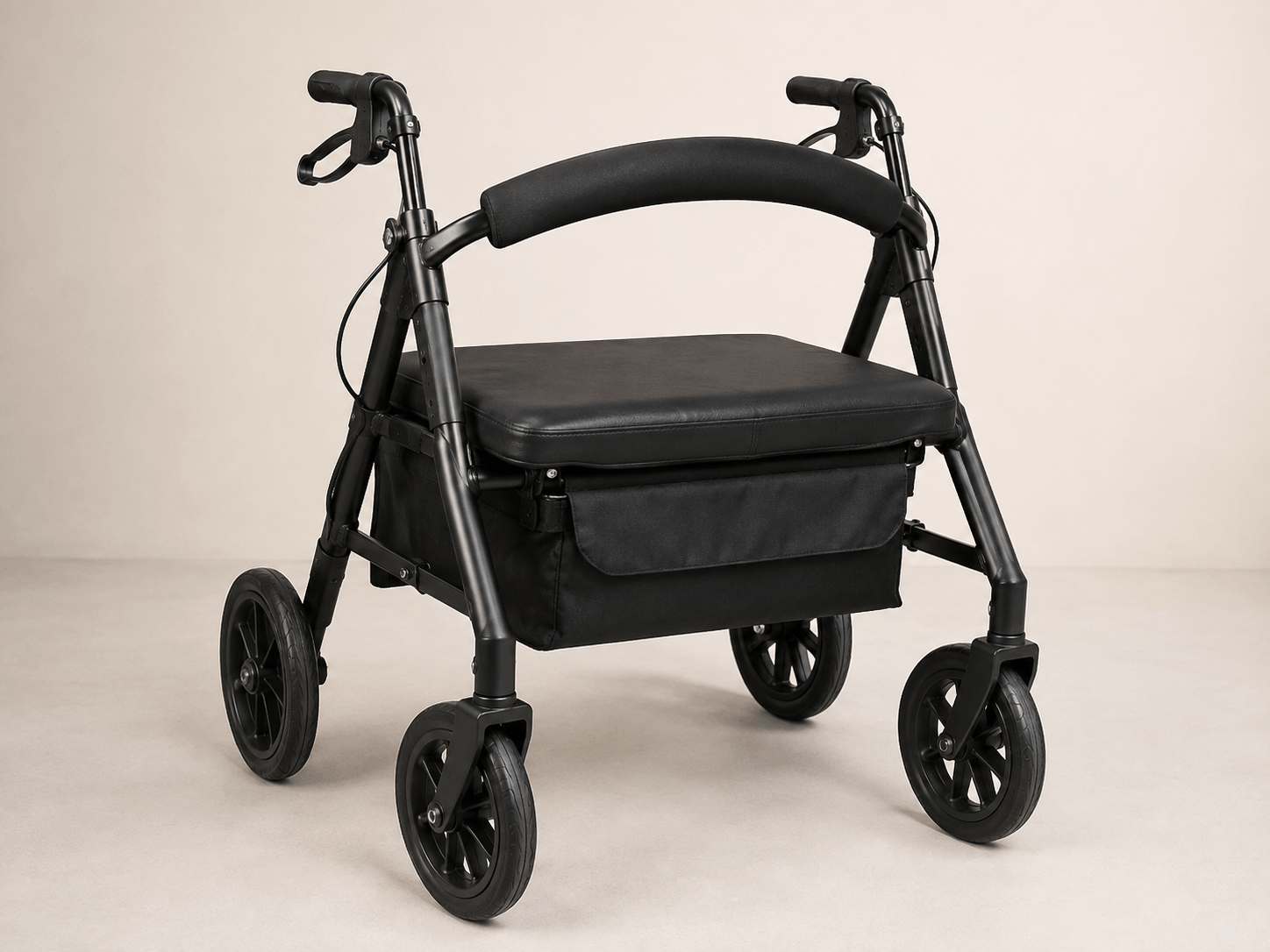
Heavy-Duty Rollators
A heavy-duty rollator may have a wider reinforced frame, larger seat, larger wheels, and higher stated weight capacity. Check the complete width, seat dimensions, handle-height range, brakes, product weight, folded size, doorway clearance, transportation, warranty, and repair support.