
Lift chairs for seniors with weak knees
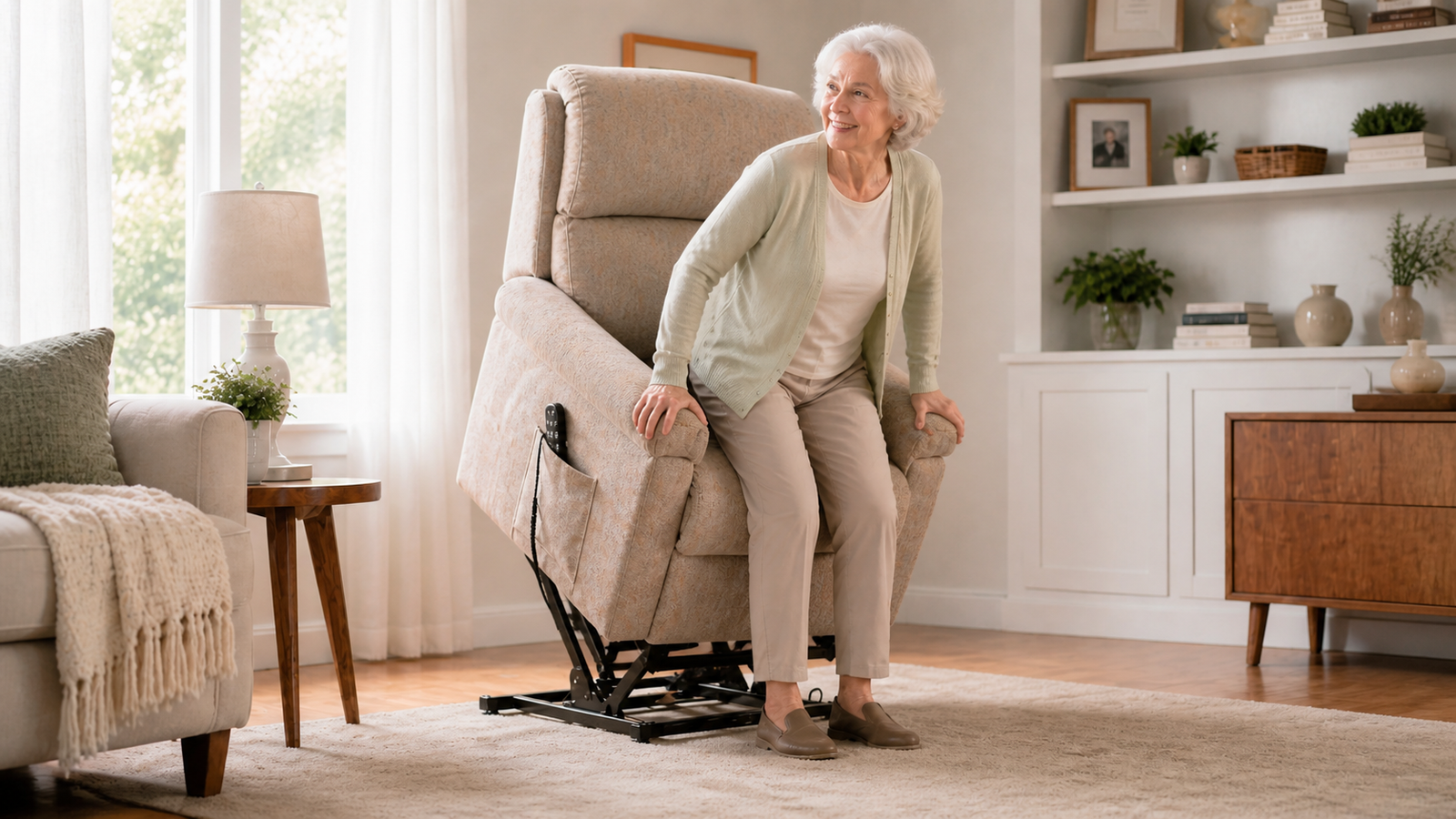
Lift chairs that may provide smoother, more supportive standing assistance for people who need extra help getting up.
Quick answer
For weak knees, look for a lift chair with smooth, controlled lifting, easy-to-use buttons, sturdy armrests, proper seat height, and a seat that fits the user's body. Do not choose by price or appearance alone. A lift chair may help make standing easier, but it does not replace medical advice, physical therapy, or fall-prevention guidance from a doctor or therapist.
Before you buy, check these 5 things
- Can the user press the remote buttons easily?
- Does the chair lift smoothly and steadily?
- Does the seat height match the user's legs and feet?
- Are the armrests sturdy enough to help with balance?
- Does the chair fit the user's body, weight, room, and doorway?

What to look for in a lift chair for weak knees
Not all lift chairs work the same way. When knee strength is limited, certain features become especially important to help support a steadier transition from sitting to standing.
Powerful motor system
The lift system should match the user's body weight and the chair's stated weight capacity. Do not choose by the motor claim alone. Look for a chair with a manufacturer-stated weight capacity comfortably above the user's weight, plus a smooth lifting motion, clear warranty terms, and simple controls.
Smooth, controlled lifting
For weak knees, the lift should feel steady and predictable. Avoid chairs that jerk, stop suddenly, or feel like they push the user too quickly. The user should be able to control the movement with a simple remote and pause if needed. Lift speed and motion vary by model, so check product videos, reviews, return policy, and manufacturer details before buying.
Easy-to-use controls
Large buttons that are easy to press matter when you have arthritis or limited hand strength. The control remote should be simple with just a few large buttons, not complicated menus or tiny text.
Proper seat height
Seat height matters because the user's feet should rest securely on the floor before the chair begins lifting. A chair that is too low, too high, too deep, or too shallow can make standing feel harder. Compare the chair's seat height and seat depth with the user's leg length before buying.
Features that may help with weak knees
Infinite position capability
Infinite position chairs let you adjust the backrest and footrest independently. This means you may find an angle that feels more comfortable and supportive for your knees and back. See our guide on position types to learn more.
Heat and massage
Heat and massage are comfort features, not medical treatment. Mild heat may feel soothing for some people, but it may not be right for everyone. Anyone with circulation problems, reduced skin sensation, diabetes-related nerve issues, recent surgery, swelling, or unexplained pain should ask a doctor before using heat or massage features.
Sturdy armrests
Wide, padded armrests may give you something solid to push against if you need extra stability standing. They should be at a comfortable height and firmly attached to the chair frame.
Common mistakes to avoid
Many people choose a lift chair based on price alone or how it looks. When you have weak knees, function matters more than appearance. Here are mistakes to watch out for:
- Buying a chair that's too small or too large for your body size
- Choosing a chair with a weak motor to save money
- Not checking the chair's lifting motion, product videos, reviews, return policy, and manufacturer details
- Ignoring the chair's overall weight capacity
- Forgetting to measure your living space before ordering
Read our full guide on common buying mistakes for more details.
Getting the right size
A chair that doesn't fit properly may not provide the support you need, no matter how strong the motor is. You need to measure yourself and your space carefully. Our sizing guide walks through the exact measurements you need to take before shopping.
Is a lift chair worth it for weak knees?
A lift chair may be worth considering if standing up from a regular chair is difficult, painful, or unsafe. The right chair can help make the sitting-to-standing movement feel more controlled. But it is not a fall-prevention device by itself. The user should still consider room layout, rugs, lighting, footwear, walking aids, and medical guidance.
Medicare may cover only the seat-lift mechanism in certain medically necessary situations, not the full furniture cost of the chair. Coverage rules depend on medical necessity, documentation, and supplier requirements. Check Medicare.gov, your Medicare plan, or your supplier before buying.
See Our Current Researched Lift-Chair Picks
Our current researched lineup covers heat and massage, lay-flat reclining, and compact simplicity. We do not currently have a separately verified weak-knees pick.
See Our Researched PicksRelated Guides
Lift Chair Finder
Answer a few questions to find the right type of lift chair for your needs.
Best Lift Chairs for Seniors
Compare top lift chair options for comfort, support, room size, and daily use.
How to Choose a Lift Chair
Complete guide to selecting the right lift chair for your needs, covering all essential features.
Heavy-Duty Lift Chairs
Lift chairs designed for higher weight capacities and wider seating.
Small Lift Chairs
Space-saving and wall-hugger lift chairs for apartments and tight rooms.
Lift Chair vs Recliner
Understand the key differences between lift chairs and recliners.