
Raised Toilet Seats for Seniors
Adding extra height to the toilet can help reduce the strain of sitting and standing. Learn how to compare shapes, locking systems, and support handles to find a secure and comfortable fit for your bathroom.
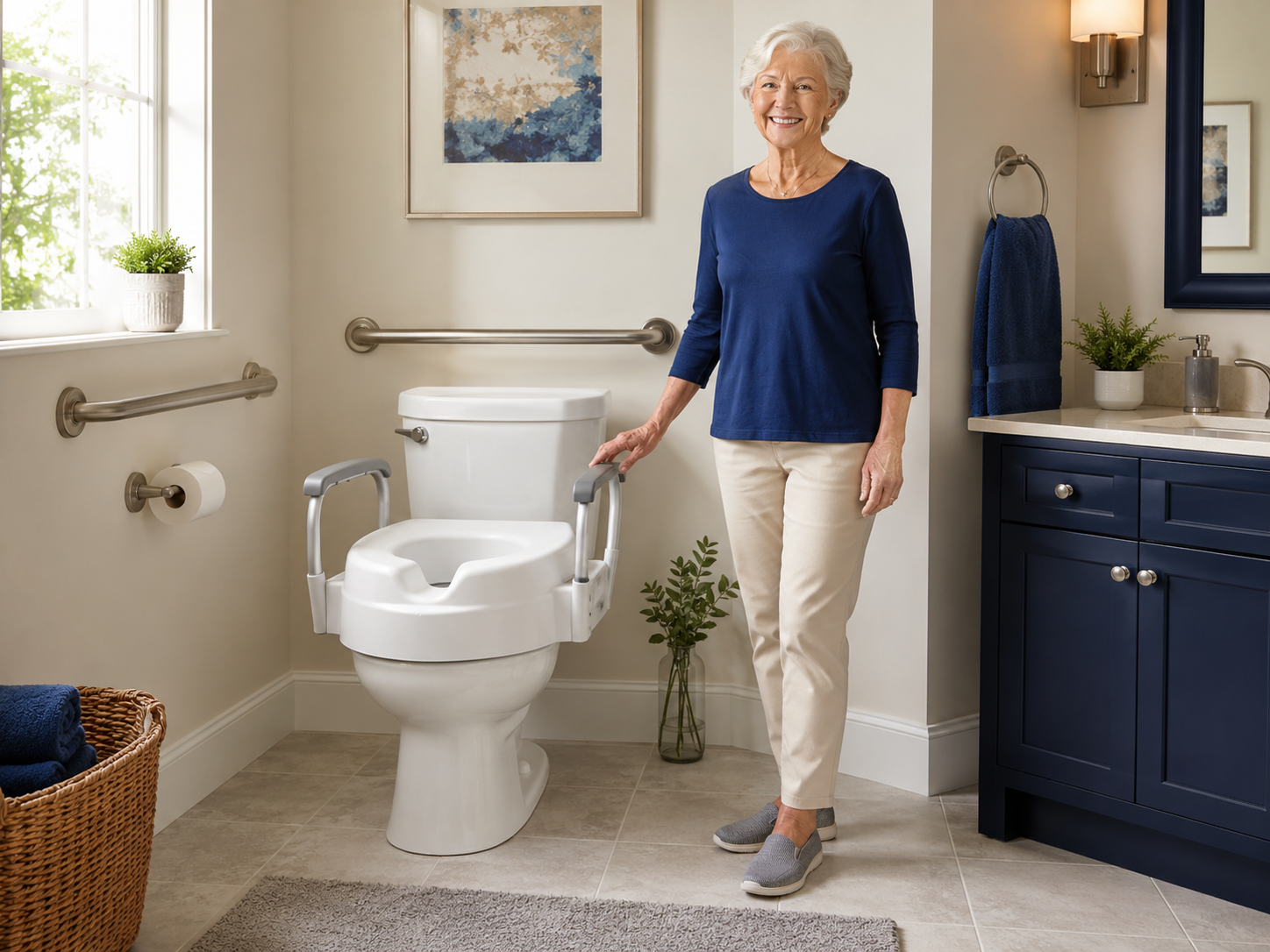
Quick Picks: Raised Toilet Seat Options
Start here if you already know the main problem you need to solve. Full product recommendations and affiliate links will be added after our partnerships are approved.
Best Basic Raised Seat
Good for users who only need a few extra inches and do not need arm support.
Best Seat with Arms
Better for users who need handles to help lower down and stand back up.
Best Locking Raised Seat
Best for reducing seat shifting when the raised seat needs to stay firmly attached.
Best Toilet Safety Frame
Helpful when arm support matters more than adding seat height.
Why a Raised Toilet Seat Matters
Adding just a few inches of height makes a significant difference for older adults dealing with joint pain, weakness, or balance issues.
Easier Sitting & Standing
Reduces the physical distance needed to lower down to the bowl and push back up.
Less Joint Strain
Minimizes deep bending, helping relieve significant pressure from the knees and hips.
More Confidence
Can make the bathroom routine feel safer, steadier, and more private.
Raised Toilet Seats and Toilet Support Options
Compare these four main styles to find the best match for the user's mobility level and your toilet bowl shape.
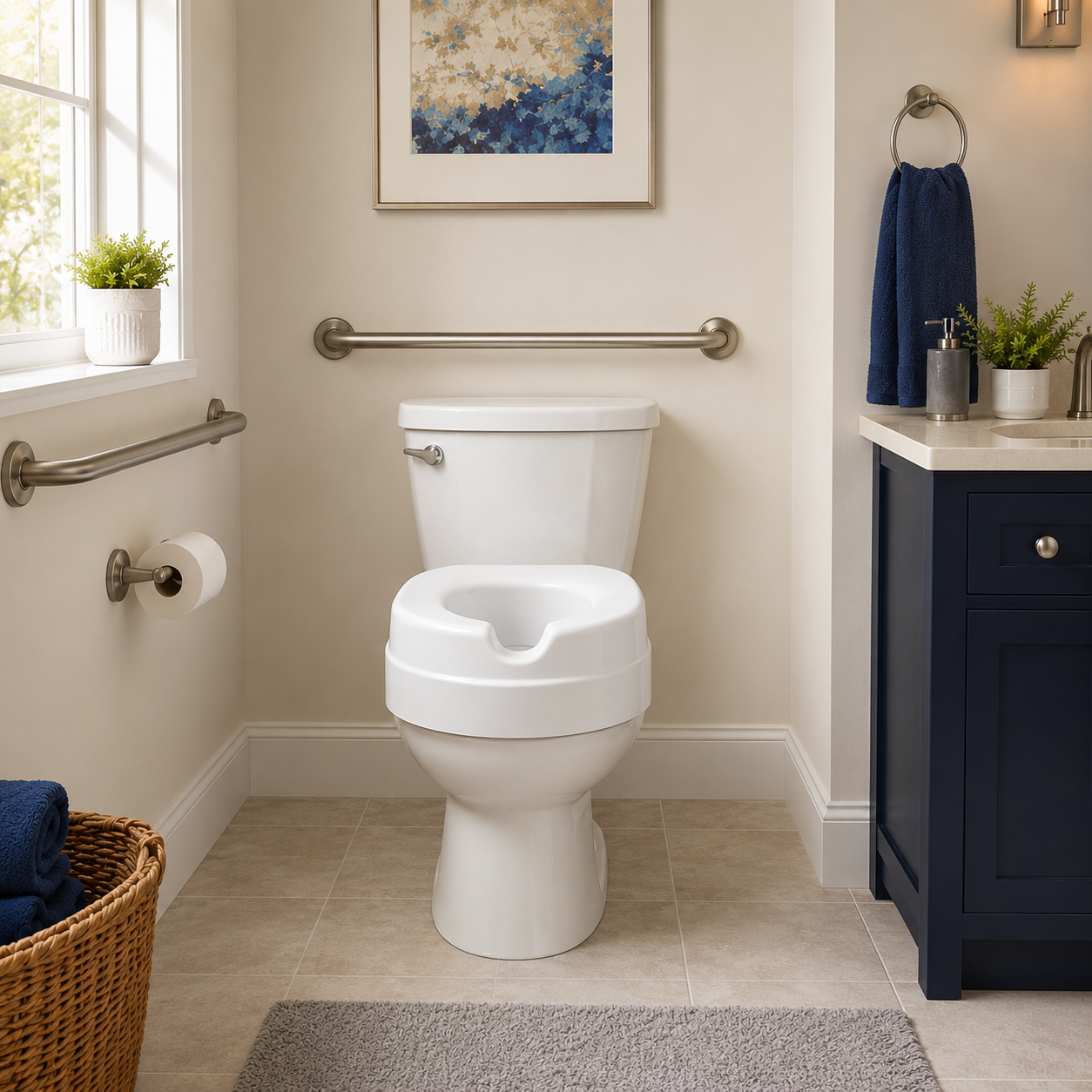
Standard Raised Seats
A basic contoured elevator seat that sits directly on the porcelain bowl (under or replacing the existing seat). Adds 2 to 5 inches of height without arms.
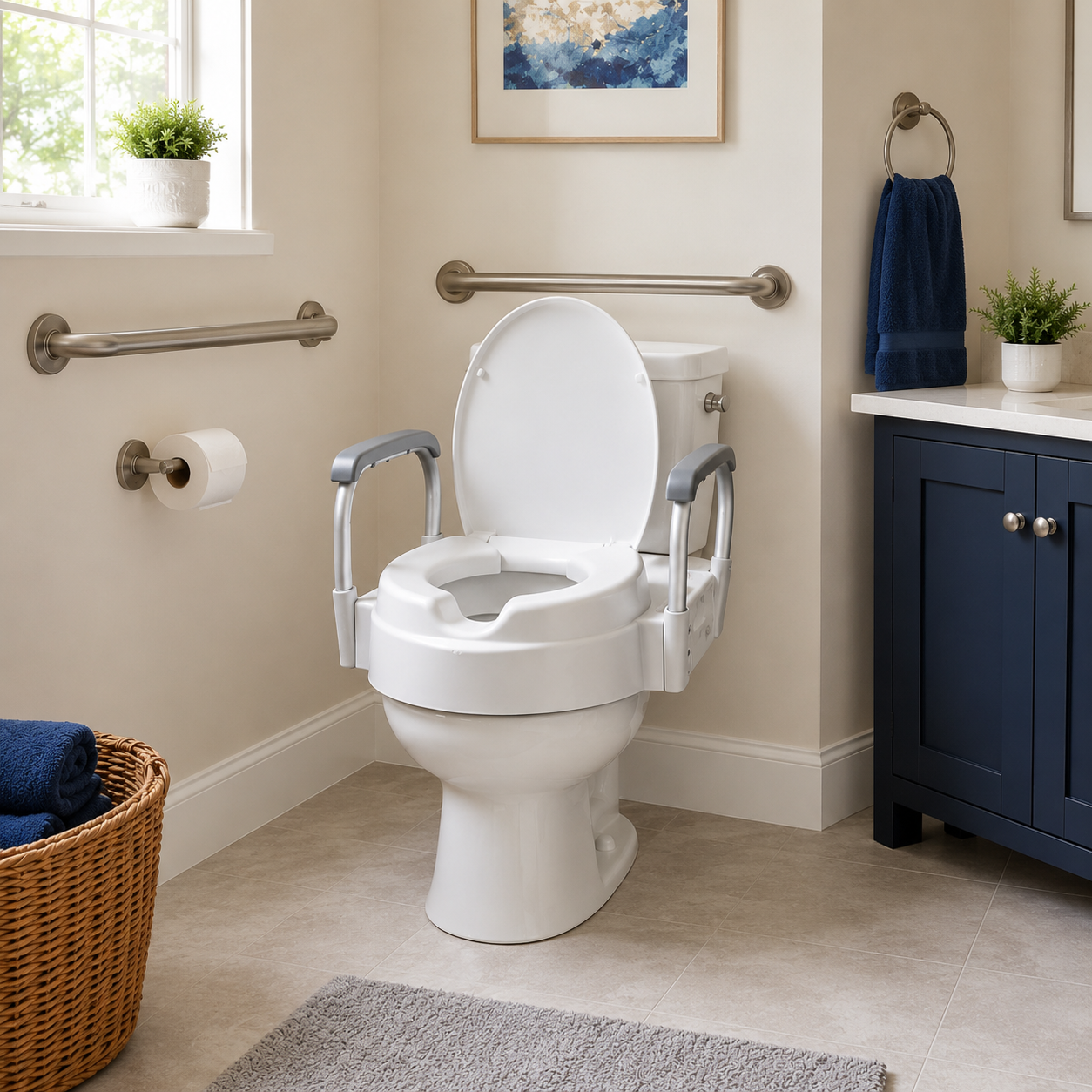
Seats with Arms
Features built-in handles on the sides to help users lower themselves down and push back up safely. Some models feature removable or drop-down arms.
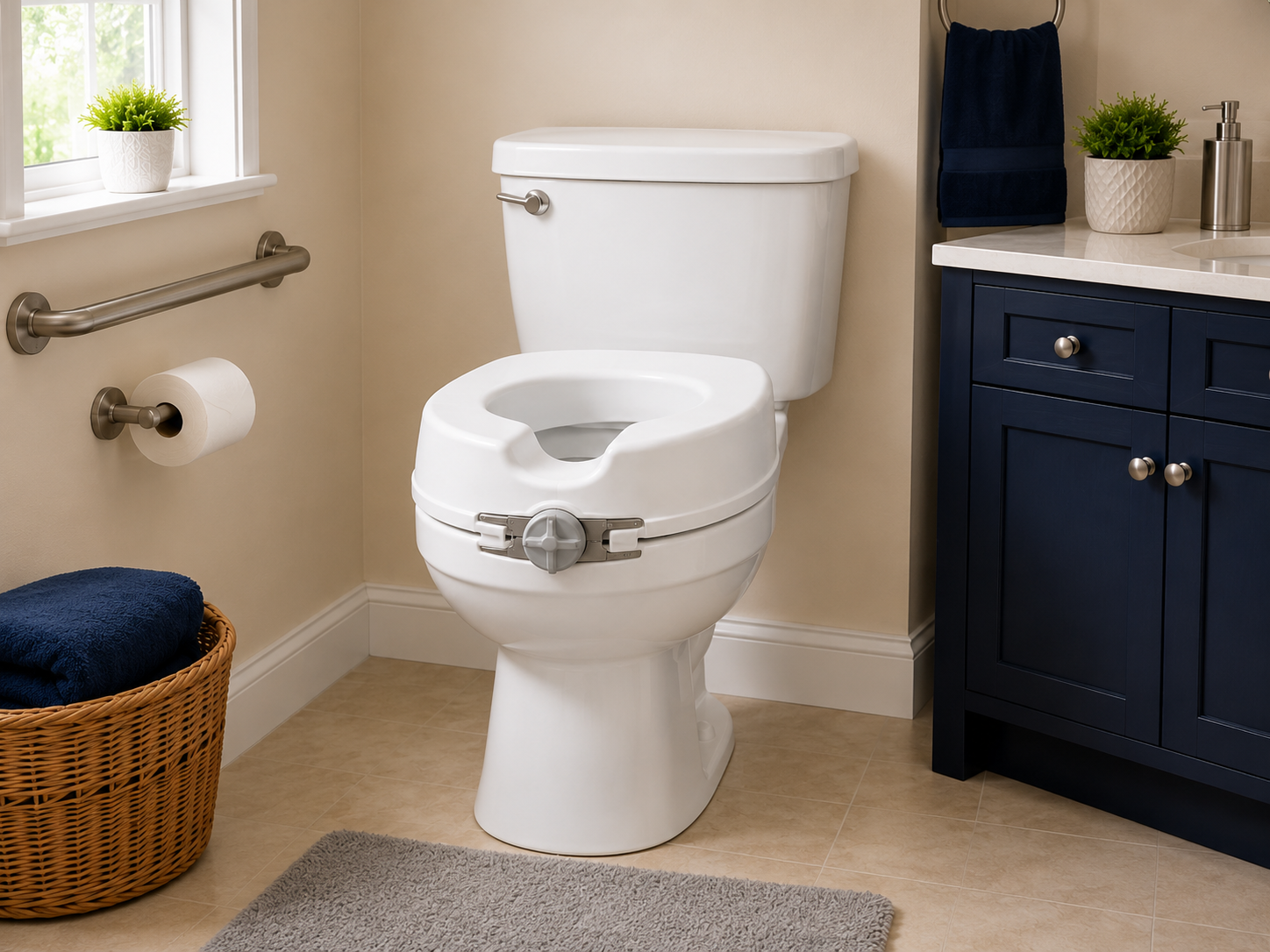
Locking Seats
Designed with a front-clamping mechanism or heavy-duty bolts that secure the raised seat to the porcelain bowl, helping to reduce wiggling or shifting.
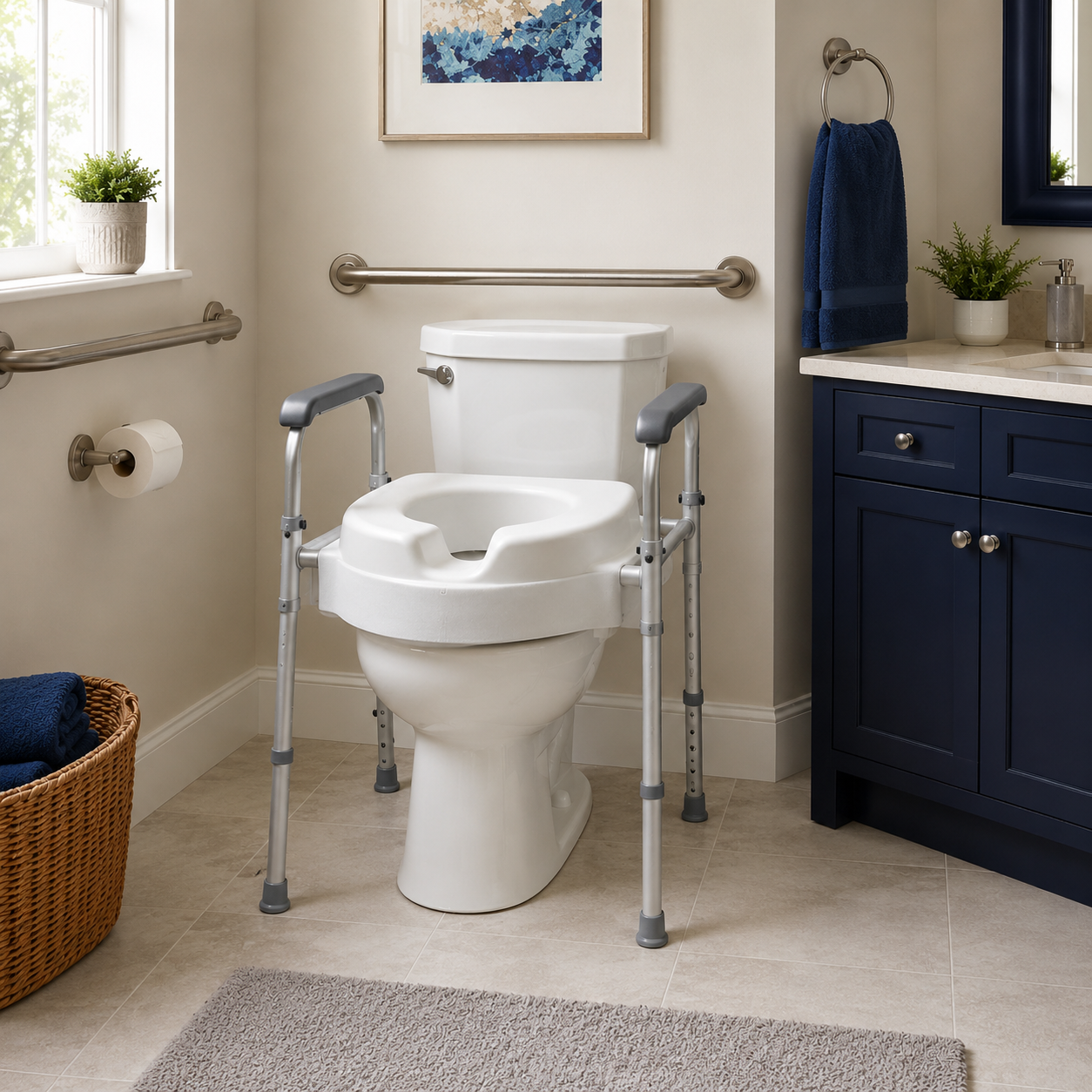
Toilet Safety Frames
A freestanding or bolt-on aluminum frame that surrounds the toilet to provide sturdy armrests. Does not raise the seat height, but offers robust hand support.
Quick Comparison
| Type | Best for | Main advantage | Main drawback | Works best in |
|---|---|---|---|---|
| Standard Seats | Adding height simply | Inexpensive, easy to clean | No arm support | Any bathroom |
| Seats with Arms | Users with weak knees | Provides leverage to stand | Arms can feel restrictive | Bathrooms with side clearance |
| Locking Seats | Helping prevent seat shifting | More secure fit | Takes more effort to remove | Primary or main bathrooms |
| Safety Frames | Sturdy hand support | Weight rests on floor, not bowl | Does not raise the seat height | Wider bathroom spaces |
Quick Help: Which One Should I Choose?
Standard Raised SeatBest if they only need a couple extra inches of height but still have good leg strength to push up.
Raised Seat with ArmsBest if they need side handles to help push up and steady themselves.
Locking SeatBest if balance is an issue or if they shift their weight heavily when sitting down, as it helps reduce sliding.
Toilet Safety FrameBest if the toilet height is already fine, but they need robust side handles to steady themselves.
Features to Look For
Added Height
Most seats add between 2 to 6 inches. Measure the user's leg length to ensure their feet will rest flat on the floor.
Weight Capacity
Standard models hold 250 lbs to 300 lbs. Bariatric seats provide reinforced support for 400+ lbs.
Arms or Handles
Look for padded grips that provide comfortable traction even when hands might be wet or damp.
Locking System
Front clamps secure the seat with a dial, while bolt-on models use the toilet's existing hinge holes for a permanent fit.
Round vs. Elongated
Toilet bowls come in two shapes. You must match the seat shape to your bowl, or it may not fit properly or securely.
Seat Width
If choosing a model with arms, verify the space between the handles will comfortably accommodate the user's hips.
Ease of Cleaning
Seamless molded plastic helps prevent grime buildup. Seats that detach easily without tools make routine cleaning simpler.
Tool-Free Install
Many modern locking models feature twist-knobs or simple brackets that do not require specialized tools to install.
Important Safety Considerations
Installing a raised toilet seat correctly is critical to maintaining a secure bathroom environment. Keep these guidelines in mind:
Check toilet shape: Never force an elongated seat onto a round bowl, or vice-versa. The mismatch creates an unstable, wobbly surface.
Locks must be secure: For clamping models, check the front dial weekly to verify it hasn't loosened during routine use.
Weight capacity: Always select a seat rated well above the user's weight to help maintain the structural integrity of the plastic over time.
Handle stability: Handles are designed for downward pushing to stand, not for pulling sideways or leaning heavily to one side.
Reachability: Adding height changes the user's relation to the toilet paper holder. Ensure it remains easily accessible without leaning.
Consider grab bars: If a user tends to pull themselves up rather than pushing down, a sturdy wall-mounted grab bar can provide safer support.
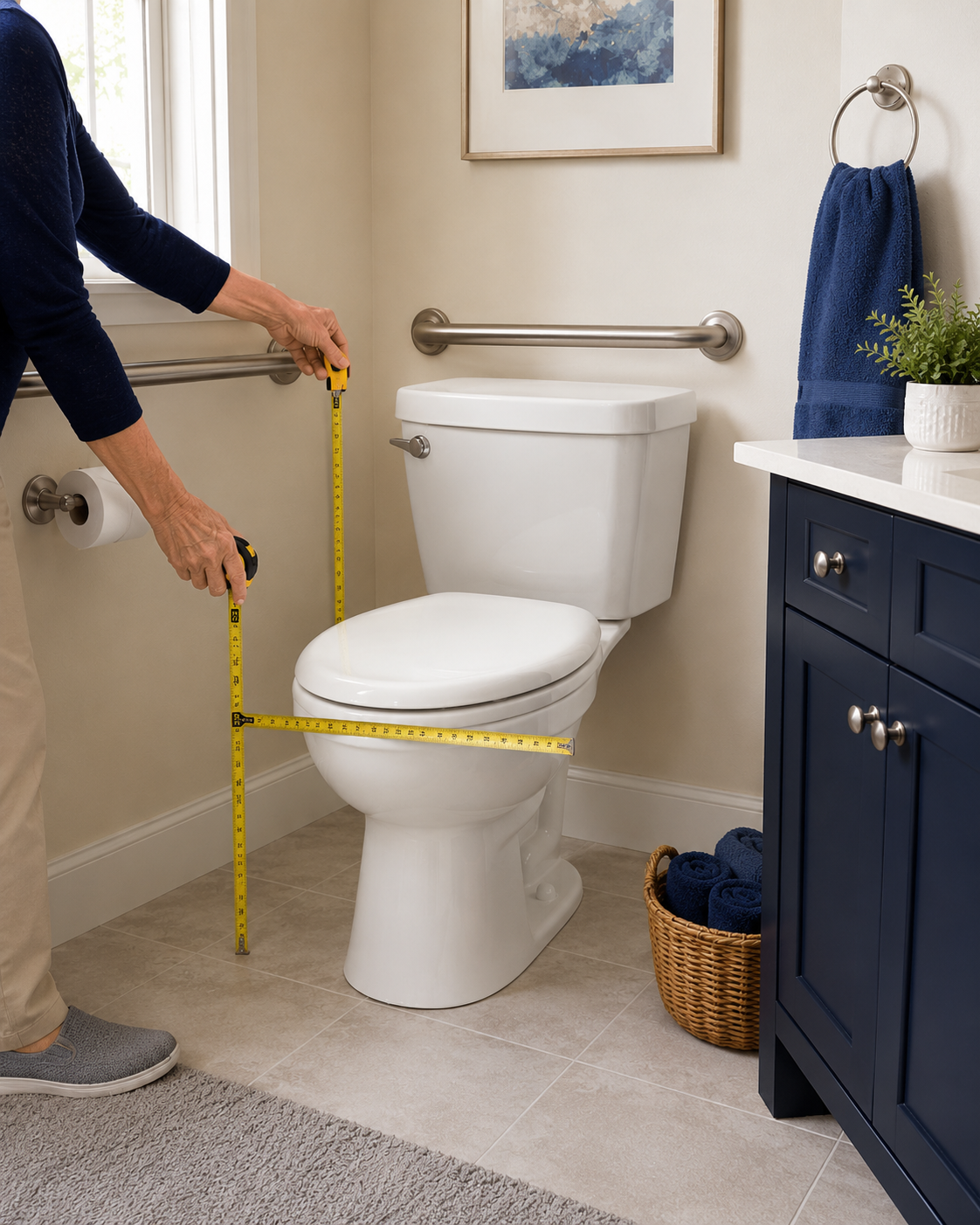
Measuring Your Toilet & Space
Before choosing a model, you need to identify your bowl shape and verify you have enough clearance.
Where to Click Next
Continue your research with our other bathroom safety guides to build a safer, more confident bathroom setup.
Best Shower Chairs
Compare seats by size, weight limit, armrests, and tub fit for safer bathing.
Bathroom Safety
Explore our comprehensive hub for grab bars, non-slip solutions, and more.
Recommended Raised Toilet Seat and Support Products
Product picks, comparison links, and affiliate options will be added here after our affiliate partnerships are approved.